Student Powered Flight
WashU VTOL promotes hands-on engineering, innovation, and aerospace design by building and testing vertical take-off and landing vehicles. We provide students opportunities to explore advanced aeronautical systems and gain real-world experience through technical projects.
BUILDING
THE FUTURE
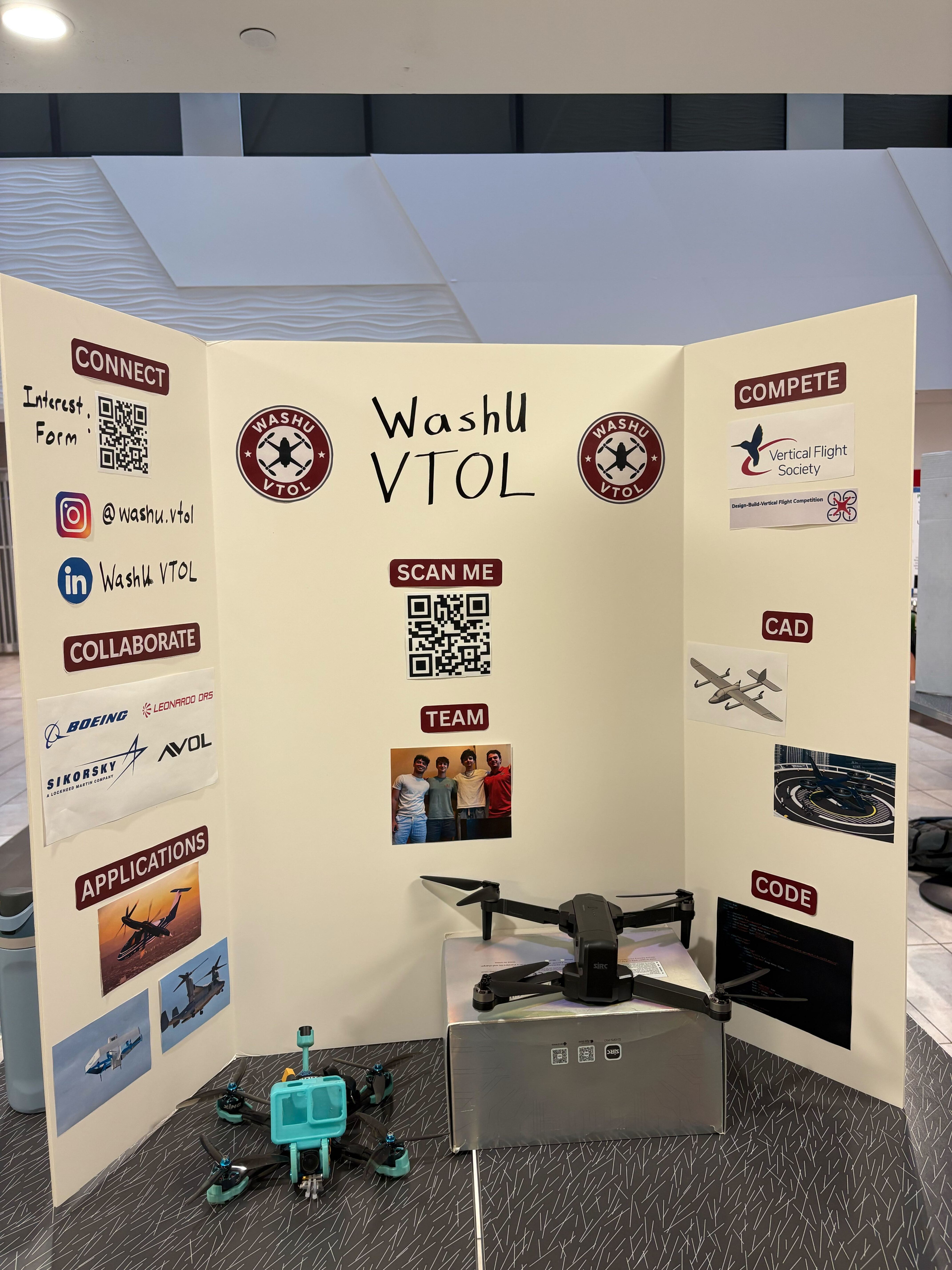
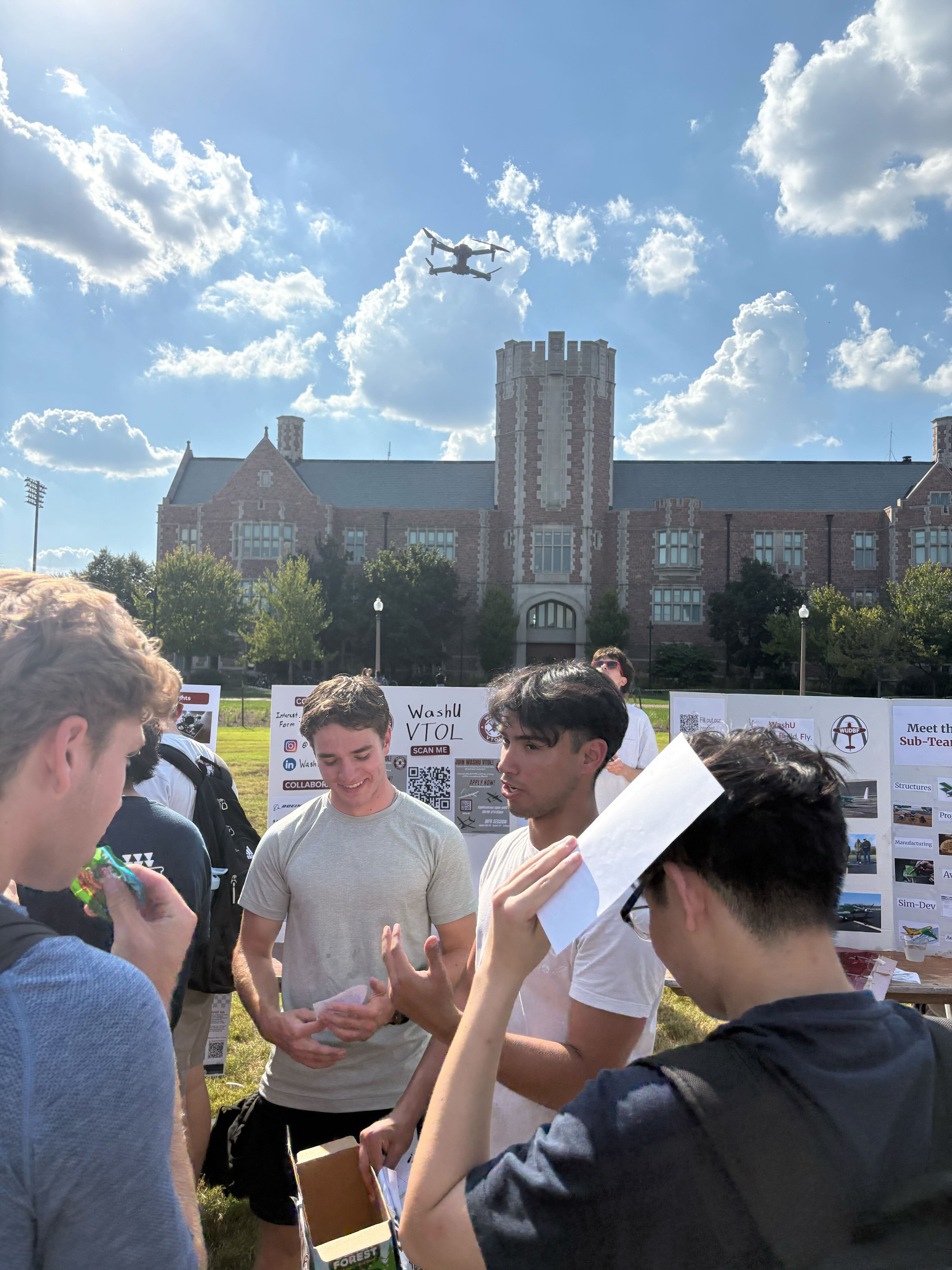
Each year, we compete in the Vertical Flight Society's Design–Build–Vertical Flight (DBVF) competition, going head-to-head with over 40 student teams from universities across the United States. Evaluated by industry professionals, our team designs, builds, and tests a cutting-edge VTOL aircraft with the goal of pushing the boundaries of innovation, performance, and engineering excellence.
Each year, we compete in the Vertical Flight Society's Design–Build–Vertical Flight (DBVF) competition, going head-to-head with over 40 student teams from universities across the United States. Evaluated by industry professionals, our team designs, builds, and tests a cutting-edge VTOL aircraft with the goal of pushing the boundaries of innovation, performance, and engineering excellence.

DESIGN.
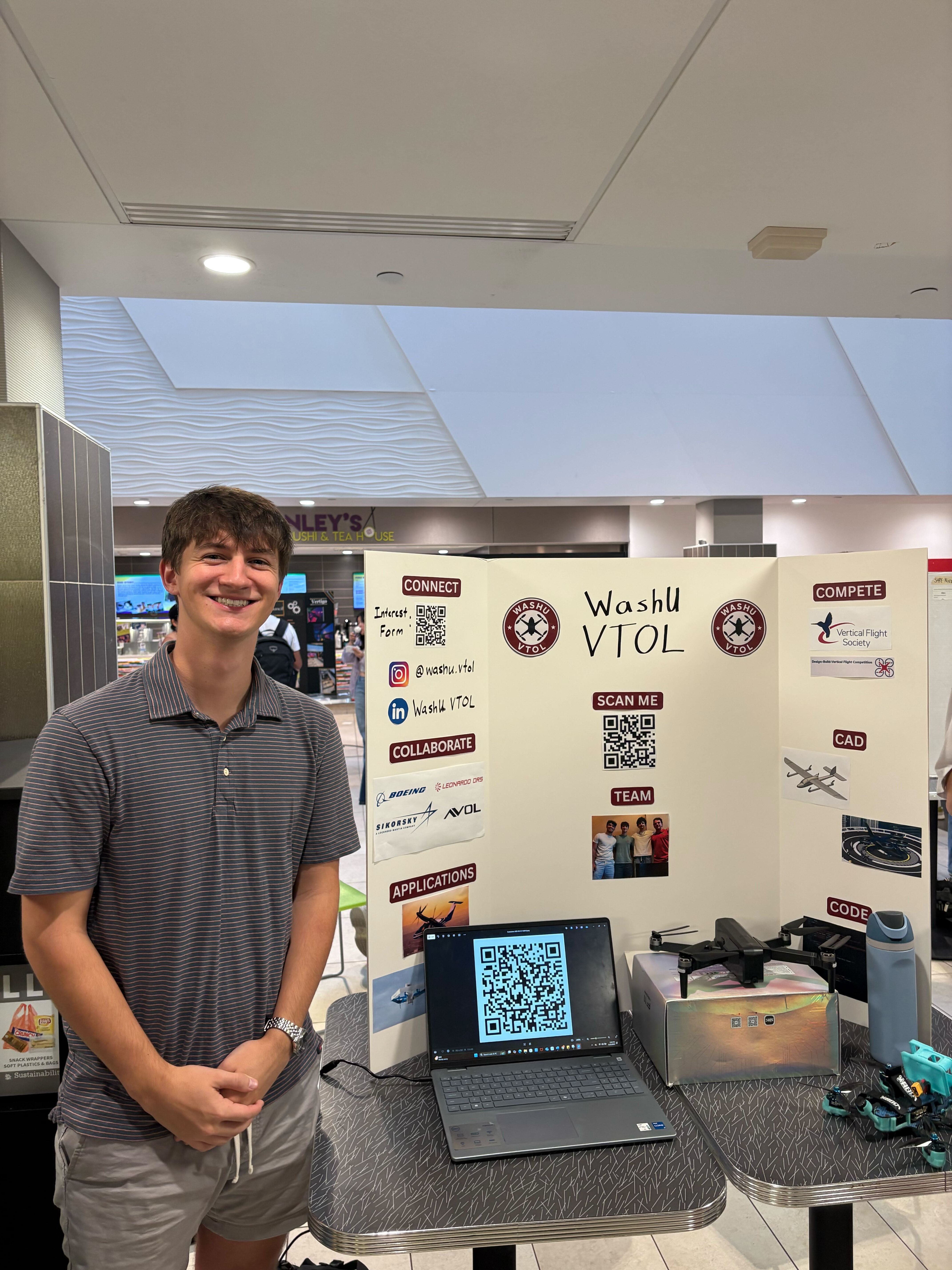
Design is the foundation of our aircraft. Using advanced computer-aided design tools, we develop and refine every aspect of our VTOL, from the primary airframe and propulsion integration to custom-manufactured components and pilot interface systems. All our designs must live up to industry standards in reliability and performance. At competition, our work is evaluated by industry professionals on both technical execution and understanding of core engineering design principles. As a result, every component is carefully analyzed, reviewed, and validated before it ever becomes part of our aircraft.
Design is the foundation of our aircraft. Using advanced computer-aided design tools, we develop and refine every aspect of our VTOL, from the primary airframe and propulsion integration to custom-manufactured components and pilot interface systems. All our designs must live up to industry standards in reliability and performance. At competition, our work is evaluated by industry professionals on both technical execution and understanding of core engineering design principles. As a result, every component is carefully analyzed, reviewed, and validated before it ever becomes part of our aircraft.

TEST.
A design is only successful if it performs as intended in flight. We validate our aircraft through rigorous aeronautical testing and simulation, including stress modeling, flight-path simulations, and onboard GPS telemetry. When performance falls short, we iterate quickly, refining our designs to ensure highest reliability.
A design is only successful if it performs as intended in flight. We validate our aircraft through rigorous aeronautical testing and simulation, including stress modeling, flight-path simulations, and onboard GPS telemetry. When performance falls short, we iterate quickly, refining our designs to ensure highest reliability.

COMPETE.
Each year, the Vertical Flight Society introduces a new mission profile that challenges us to adapt our aircraft to real-world scenarios. This season, our objective is to design and build a VTOL aircraft capable of simulating wildfire response operations.
Each year, the Vertical Flight Society introduces a new mission profile that challenges us to adapt our aircraft to real-world scenarios. This season, our objective is to design and build a VTOL aircraft capable of simulating wildfire response operations.
Current Objective